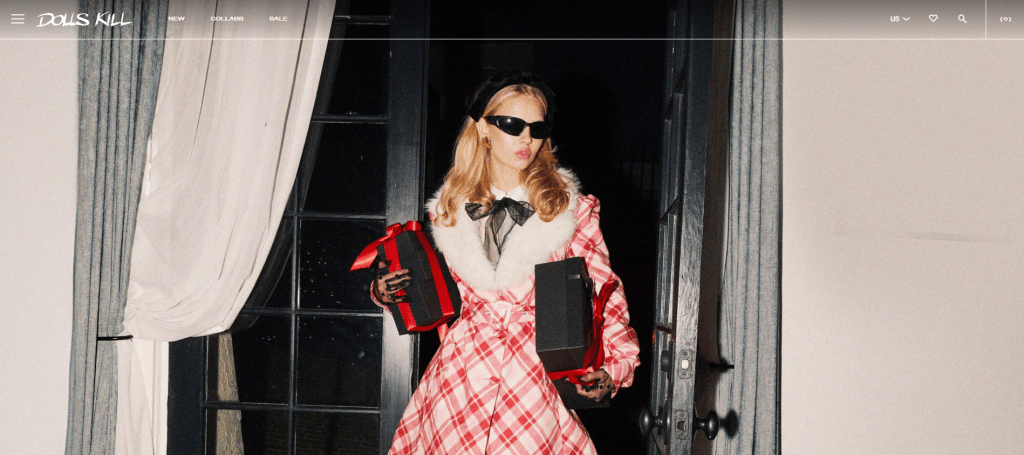
When I first joined Dolls Kill, I was blown away by the sheer size of their website—but I was equally shocked by how little non-branded traffic they were getting. I came on board to implement SEO strategies after a messy CMS migration from HubSpot to Shopify, which cost the site around 30,000 organic clicks on the SERPs.
- Dolls Kill Website Migration
- SEO Strategy for Shopify E-Commerce Website
- Data and Metrics
- E-Commerce Content Strategy for Categories
- Final Thoughts

Dolls Kill Website Migration
The primary reason for this steep drop?
They missed migrating about 67,000 product pages, which resulted in a flood of 404 errors. Worse, these pages weren’t flagged in Google Search Console, so the team moved ahead without seeing the full picture. This was a costly oversight.
Lesson learned: Always bring in experts to analyze all your data before a major migration. Even if you can’t see certain data points, it’s crucial to cover all bases to avoid big losses.
The main reason for this tragic drop was the lack of migration from 67K product pages that ended up being 404, these pages were not reported on Google Search Console, so they decided to run the migration without seeing all data.

In the case of Dolls Kill, SEMrush data showed a massive drop in organic traffic, not just because of the botched migration but also due to Google’s March 2022 Core Update. This update hit e-commerce sites hard, changing the way Google ranks products and transactional content.
SEO Strategy for Shopify E-Commerce Website
Today, e-commerce businesses need to heavily rely on Google Merchant Center (GMC). Strong, optimized product titles, compelling meta descriptions, and high-quality images are non-negotiable. If a brand also has physical stores, local SEO strategies can provide a boost—but that’s a topic for another day.
Key actions I took to recover traffic:
- Google Merchant Center Optimization: I updated the GMC feed with killer meta tags focused on grabbing users’ attention to drive purchases.
- Catalog Page Cleanup: Dolls Kill had serious cannibalization issues—there were 12 pages for “Shoes,” 7 for “Platform Shoes,” and 5 for “Skirts,” all without canonical tags. I cleaned up and redirected about 2,000 pages, which had an immediate impact.
- Internal Linking Overhaul: This was a big gap. I added category links across product and catalog pages to signal Google which pages were most important.
- Content and Category Optimization: Dolls Kill’s site had around 3,000 categories that were poorly defined, had minimal content, faced duplication issues, and lacked internal links. My strategy was to optimize content hygiene, reducing the number of categories to 1,000 and focusing on enriching the remaining ones.
Data and Metrics
The results were impressive: I shifted the branded-to-non-branded traffic ratio from 93%-7% to 77%-23%, which led to a 17% increase in non-branded traffic. This optimization brought in an additional 12,000 non-branded organic clicks weekly.
Content Strategy: We focused on creating new categories targeting long-tail keywords like “Gothic Shoes,” “Gothic Bikinis,” “Festival Outfits,” and niche categories like “Stripper Outfits.” This helped us capture more of the non-branded traffic, which was crucial for growth.
Ultimately, my SEO efforts paid off, helping Dolls Kill regain and boost its organic traffic—while also future-proofing the site against further search engine updates.
E-Commerce Content Strategy for Categories
DK’s had around 3,000 categories that lacked clear definitions, had minimal content, faced duplication issues, and suffered from internal linking gaps.
My strategy started with content hygiene in order to decreased the number of categories to 1,000. After optimizing these categories, we shifted the ratio to 77% branded traffic and 23% non-branded traffic, resulting in a 17% increase in non-branded traffic.
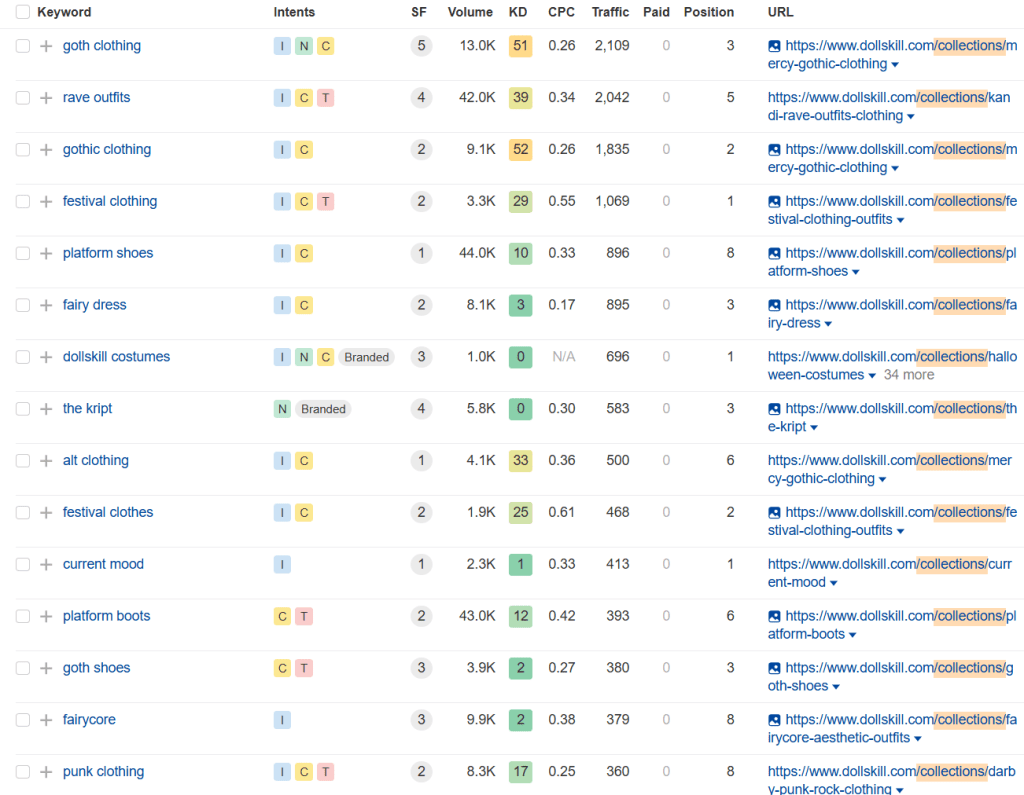
This optimization generated an additional 12,000 organic non-branded clicks on a weekly basis. The strategy involved creating new categories focused on long-tail keywords.
Examples include ‘Gothic Shoes,’ ‘Gothic Bikinis,’ ‘Gothic Dresses,’ as well as new categories like ‘Stripper Outfits‘ and ‘Festival Outfits.’
Final Thoughts
Take a look at: Legal document software
Google’s search results for e-commerce have shifted dramatically. SEO strategies that worked in 2022 are pretty much outdated now because Google’s results prioritize lists of products directly from Google Merchant Center (GMC).
Back in 2020, a solid approach was adding content to catalog pages and including detailed FAQs at the bottom to cover every stage of the customer journey. But today, it’s all about optimizing the user experience for individual products. For example, if you search for “Black Mini Skirt,” the top organic result (below the GMC listings) is Forever 21. So, why is that?
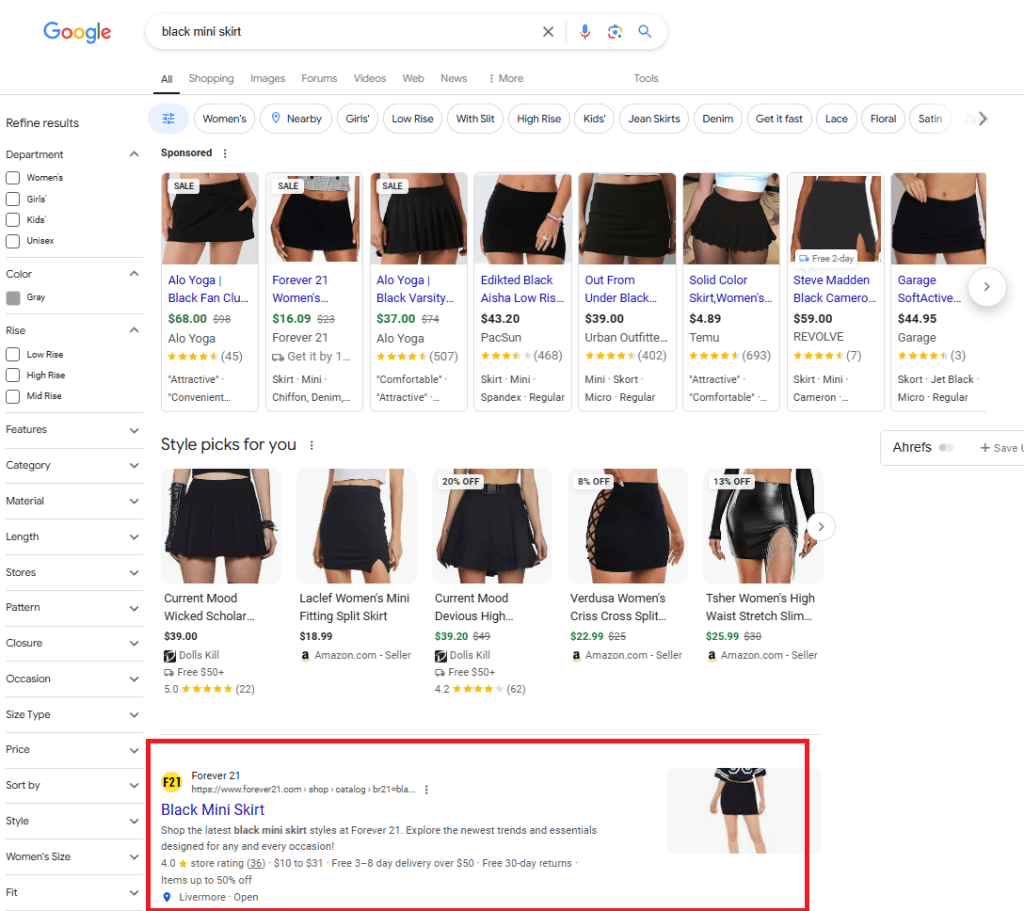
Here’s what sets them apart:
- Brand Authority and Reputation
- Inventory (Forever 21 showcases nearly 2,000 products related to black mini skirts)
- Media (high-quality images and videos)
- User Experience
- Internal Linking
- Site Speed
There are still plenty of opportunities for e-commerce sites to rank their catalog pages, especially when targeting broad queries. For example, users often search for “clothing type + outfits” when looking for ideas for specific occasions. Let’s take the query “Rave Outfits” as an example.
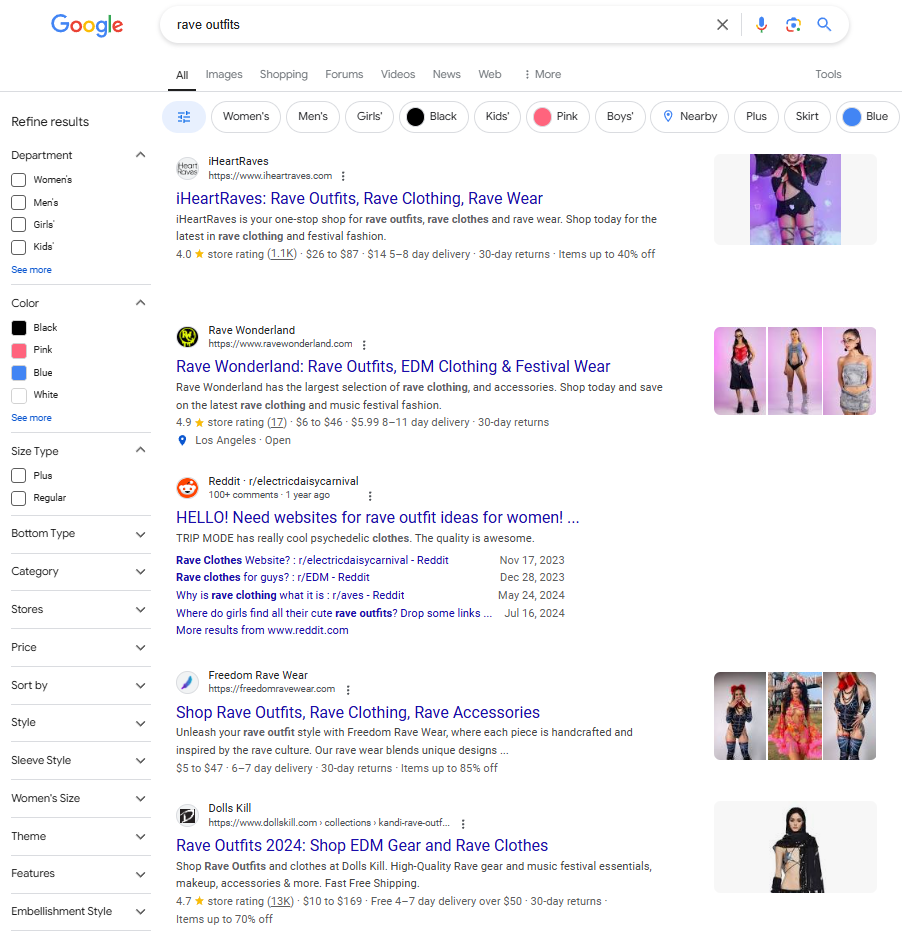
Google doesn’t just display product lists; instead, it shows websites offering a range of options, with filters on the side to narrow down choices. Your goal as an e-commerce strategist? Make sure Google associates your brand with those types of searches.
Remember: Build authority for your brand and services, and make sure Google recognizes your relevance in these niches!
Thanks for reading, and if you have any questions, let’s talk!
Mauricio Sordille
Head of Growth Marketing – Digital Marketing Agency
📧 contact@mmpgoals.com | ☎️ 510-384-0208

 MMPG
MMPG 